
Connected TV (CTV) Advertising in 2026: Why Automotive Dealers Can’t Ignore It
February 20th 2026 by Click Here Digital
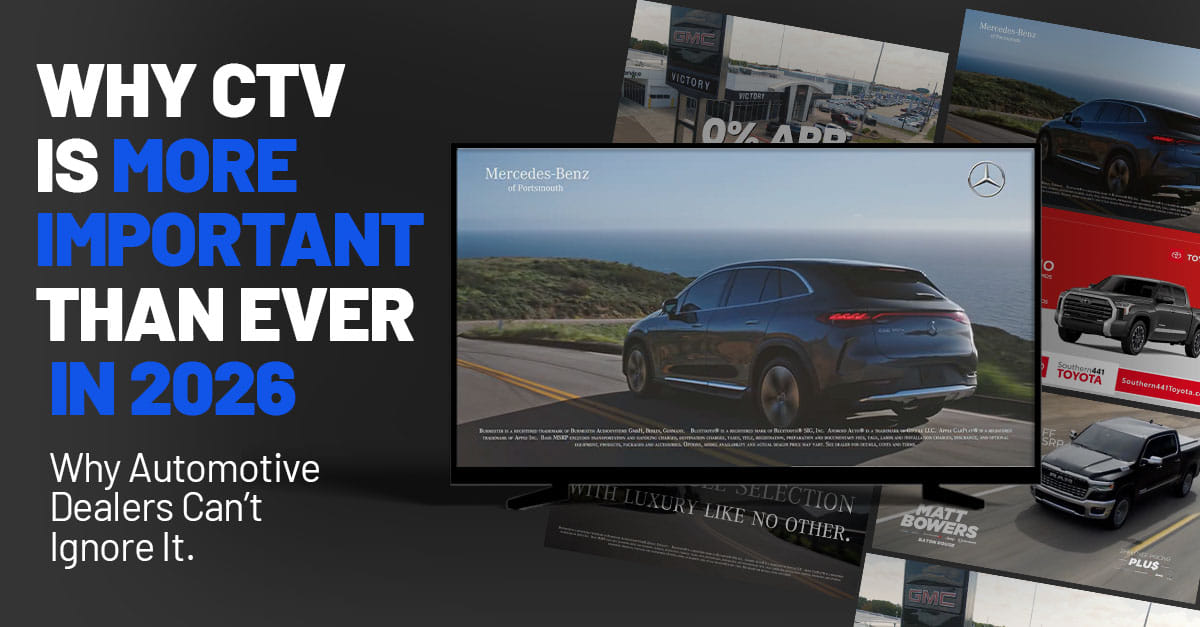
Connected TV (CTV) advertising in 2026 is no longer an experimental awareness channel. It is a core performance driver influencing vehicle purchase decisions across the funnel.
Automotive advertisers who are not investing in advanced, blended CTV advertising strategies risk losing market share to competitors already capturing high-value streaming audiences.
Streaming dominance has reshaped how consumers engage with television. The question is no longer whether to advertise on CTV — it’s how strategically you’re executing it.
What Is Connected TV (CTV) Advertising?
Connected TV (CTV) advertising refers to video ads delivered through internet-connected television devices such as smart TVs, streaming sticks, gaming consoles, and subscription streaming platforms.
Unlike traditional linear TV advertising, CTV allows advertisers to:
- Target audiences deterministically
- Control frequency and sequencing
- Measure performance across digital touchpoints
- Connect exposure to downstream site visits and conversions
Modern CTV advertising blends the scale and attention of television with the accountability of digital marketing.
Streaming Dominance Has Made CTV the Primary TV Channel
Cord-cutting continues to accelerate, while traditional linear reach declines year over year. Households now spend more time on streaming platforms than cable or satellite.
Automotive shoppers increasingly consume TV through platforms like Hulu, ESPN, YouTube TV, and Amazon streaming environments.
That means CTV is no longer supplemental — it is the primary way consumers experience television.
Dealers who continue allocating budgets primarily to linear TV are reaching a shrinking audience while competitors dominate streaming environments.
CTV vs OTT: What Automotive Advertisers Need to Know
The terms CTV and OTT are often used interchangeably, but there is a strategic difference.
- OTT (Over-the-Top) refers broadly to streaming content delivered over the internet.
- CTV (Connected TV) specifically refers to ads delivered on television screens via connected devices.
For automotive advertisers, CTV placements on premium streaming TV environments offer higher attention, stronger brand recall, and improved household-level targeting compared to broader OTT inventory.
Understanding the difference allows advertisers to build smarter streaming TV strategies instead of fragmented buys.
CTV Now Delivers Measurable Performance — Not Just Awareness
In 2026, connected TV advertising delivers measurable outcomes through cross-channel attribution, deterministic targeting, and advanced reporting.
Cross-Channel Attribution
CTV exposure can now be connected to website visits, vehicle detail page views, and lead submissions. Advertisers can see the relationship between streaming exposure and downstream digital behavior.
Deterministic Audience Targeting
Dealerships can reach in-market auto shoppers using behavioral and household-level targeting across streaming platforms.
Frequency Control & Sequential Messaging
Advertisers can guide shoppers through the funnel by sequencing creative — from brand awareness to offer-driven messaging — ensuring sustained impact without oversaturation.
How to Advertise on CTV: Why Blended Strategies Outperform Single-Platform Buys
Blended CTV strategies combine Amazon streaming inventory, YouTube TV placements, Hulu and ESPN environments, and programmatic CTV.
This multi-platform execution expands incremental reach, reduces audience duplication, improves frequency distribution, and centralizes reporting and optimization.
Premium Live Sports + Commerce Integrations Are Accelerating Impact
Live sports remain the highest-attention streaming environment. ESPN and major sports packages deliver incremental reach unavailable through traditional media alone.
The 2026 advertising ecosystem increasingly merges television exposure with digital action — allowing advertisers to connect brand presence with measurable performance.
CTV Investment Is Directly Tied to Dealership Market Share Growth
Dealers running always-on CTV advertising maintain top-of-mind awareness, capture streaming audiences during research cycles, and drive lift in branded search and site traffic.
Dealers absent from streaming environments lose share to visible competitors.
Frequently Asked Questions About CTV Advertising
What is connected TV advertising?
Connected TV advertising delivers video ads through internet-connected television devices such as smart TVs and streaming platforms, allowing advertisers to combine television reach with digital targeting and measurement.
What is the difference between CTV and OTT?
OTT refers broadly to streaming content delivered over the internet, while CTV specifically refers to ads delivered on connected television screens. CTV placements typically offer higher attention and premium inventory environments.
Is CTV advertising measurable?
Yes. Modern CTV campaigns leverage cross-channel attribution, deterministic targeting, and performance reporting to connect streaming exposure with website visits and conversions.
Does CTV advertising work for automotive dealers?
Yes. CTV allows dealerships to reach in-market shoppers across streaming platforms, maintain consistent visibility, and influence branded search and site traffic lift.
How do I get started with CTV advertising?
The first step is evaluating your current video strategy to identify gaps in streaming coverage, platform mix, and measurement capabilities.
Ready to Strengthen Your CTV Strategy?
If connected TV advertising is not fully integrated into your media mix, you may be missing high-value streaming audiences.

Contact us today and watch your business grow.
Ready to take your marketing strategy to a new level?
We'd love to hear from you.