
Meta's Shift to Lead Optimization & What it Means For Your Business
March 30th 2026 by Click Here Digital
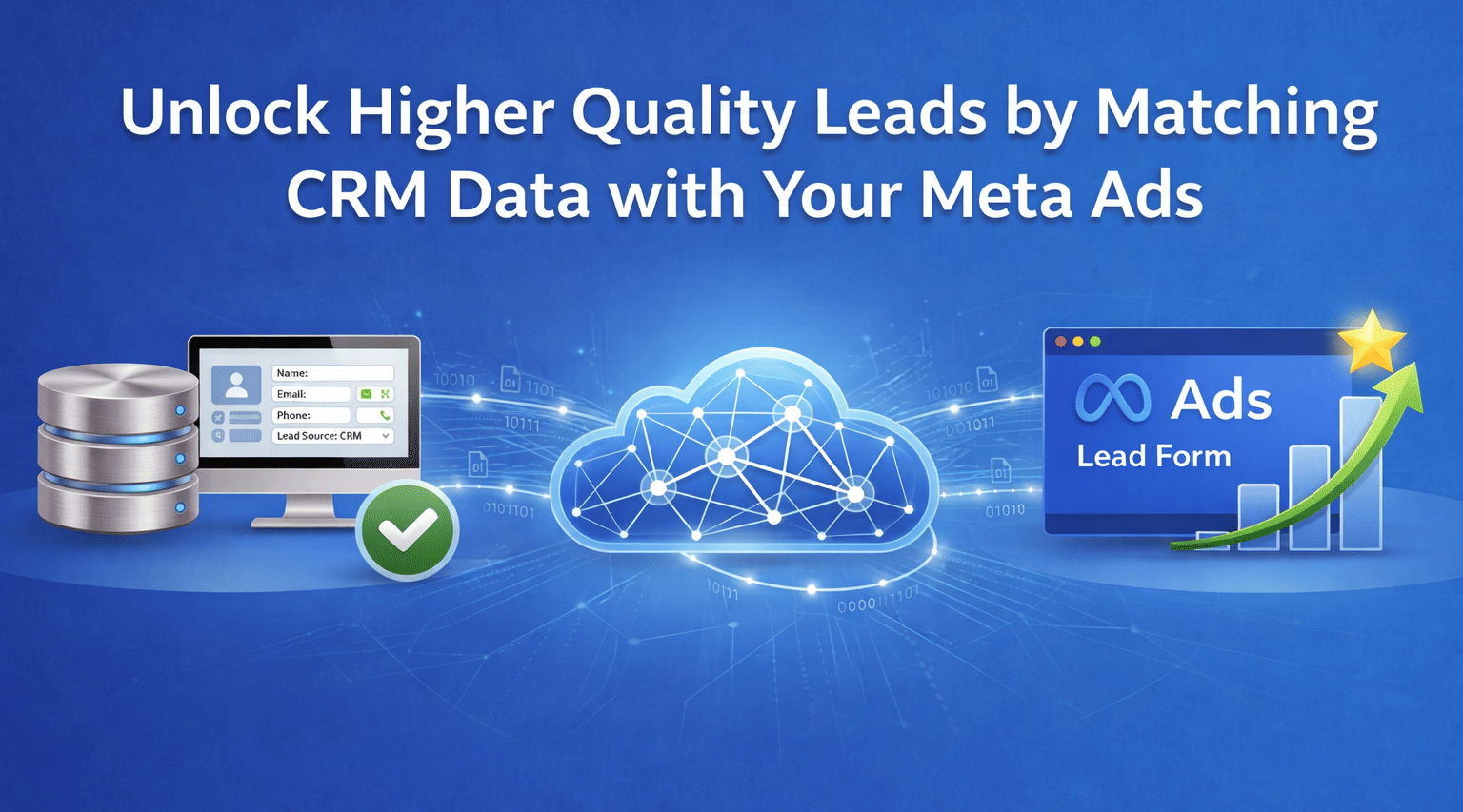
If you run lead generation campaigns on Facebook or Instagram, the way Meta optimizes your campaigns is changing. The platform is moving away from simply maximizing lead volume and toward optimizing for leads that are more likely to become actual customers.
The key to this shift is CRM data. By connecting your CRM to Meta through the Conversions API for CRM, you give the platform real signals about which leads actually convert — and Meta uses that information to find more people like them.
Here's what's changing, what it means depending on your setup, and what you should be thinking about right now.
1. Meta Is Prioritizing Lead Quality Over Volume
For years, the default approach to Meta lead generation was straightforward: optimize for the most leads at the lowest cost per lead. The problem is that a low CPL doesn't mean much if those leads never turn into customers.
Meta is now encouraging advertisers to shift toward the Conversion Leads performance goal. Instead of optimizing for form submissions, this goal optimizes for leads that complete a meaningful downstream action — becoming a qualified lead, scheduling an appointment, or making a purchase.
The distinction matters.
A campaign optimized for volume shows your ads to people most likely to fill out a form. A campaign optimized for conversion leads shows your ads to people most likely to become paying customers. Same platform, fundamentally different targeting logic.
2. Why CRM Data Is the Missing Link
For the Conversion Leads performance goal to work effectively, Meta needs to know what happens after someone submits a form. Did that lead book an appointment? Did they show up? Did they buy?
That's where the Conversions API for CRM comes in.
This integration creates a direct connection between your CRM and Meta's ad delivery system, allowing you to send lead stage updates back to the platform. When a lead moves through your pipeline — from new contact to qualified opportunity to closed deal — Meta receives that signal and uses it to refine who sees your ads going forward.
This is a fundamentally different data flow than what most advertisers are used to. Instead of Meta only knowing that someone clicked and submitted a form, it now learns the full downstream outcome. Over time, this feedback loop teaches the algorithm what a quality lead looks like for your specific business, improving both targeting and data-driven campaign optimization.
One important note: this is a separate integration from a standard Conversions API setup for web events. Even if you already have CAPI configured for your website, the CRM integration requires its own setup because the data source and required parameters are different. Meta permanently discontinued the Offline Conversions API in May 2025, so all offline conversion tracking — including CRM events — now flows through the standard Conversions API.
3. What This Means for Website Form Lead Generation
If your campaigns drive traffic to forms on your own website, you have flexibility in how you optimize for lead quality. Several integration paths are currently supported:
Conversions API for CRM (recommended): Connect your CRM directly to Meta so lead stage updates flow back automatically. This provides the richest signal for optimization and is the approach Meta is pushing hardest.
Conversions API with web events: If you already track conversion events server-side, you can use those signals to optimize toward higher-quality outcomes.
Meta Pixel: Standard pixel-based tracking can still support optimization, though it's increasingly limited by browser privacy restrictions, ad blockers, and iOS changes.
The bottom line: website form advertisers aren't being forced into a single integration path. But the more downstream data you can share with Meta, the better your campaigns will perform.
4. Consolidated Data and Attribution Are Now Essential
This is where the change is most significant. For advertisers using Meta's native Instant Forms, where users fill out a form without leaving Facebook or Instagram, optimizing for lead quality through the Conversion Leads performance goal now requires sharing CRM data through Conversions API for CRM.
Without this integration, campaigns using Instant Forms may not be able to fully optimize for higher-quality leads. You can still run lead generation campaigns, but you'll be limited to optimizing for volume rather than downstream conversion quality.
If you are not currently using the Conversion Leads performance goal, immediate integration is not strictly required. However, given the direction Meta is heading, connecting your CRM now is a smart move for future-proofing your lead generation strategy.
Meta has also introduced additional features to support lead quality within Instant Forms, including SMS phone number verification, work email requirements, and conditional logic that dynamically adjusts form questions based on user responses. These tools help filter for higher-intent leads even before the CRM integration does its work on the back end.
5. The Performance Case — and What We're Testing Right Now
Does optimizing for quality actually drive better results? Meta's own testing data says yes.
According to Meta, campaigns using Instant Forms with a CRM connected through Conversions API that optimized for conversion leads saw an average 15 percent lower cost per quality lead. Separately, Meta reported that advertisers running both Instant Form and website form campaigns together saw an average 60 percent lower cost per lead and 125% increase in lead volume compared to website form campaigns alone.
These are averages based on Meta's internal testing, not guaranteed outcomes — results will vary based on industry, audience, and campaign structure. But the directional signal is clear: sharing more data with Meta's optimization system leads to more efficient spend and better lead quality.
At Click Here Digital, we're not waiting for case studies to tell us what works. We are currently running a direct alpha test with Meta to measure these capabilities in real time. By testing these integrations early, we're gathering first-hand performance data to ensure our clients are positioned ahead of the curve as these features roll out more broadly.
Meta is also making implementation easier across the board. Expanded CRM partner support now includes direct integrations with Salesforce, HubSpot, and Zoho. Third-party connectors like Zapier and LeadsBridge offer code-free setup options. Zapier is currently offering 100,000 free lead events per month for six months to help advertisers get started with the Conversions API for CRM.
6. What Should You Do Next?
If you're running Meta lead generation campaigns, here's a practical starting point:
Check your performance goal. Are you optimizing for lead volume or conversion leads? If your goal is set to maximize leads rather than conversion leads, you may be leaving quality on the table.
Evaluate your CRM integration. Do you have Conversions API for CRM connected, or just standard web CAPI or Pixel? These are separate integrations with different data flows.
Prioritize if you use Instant Forms. Connecting your CRM through Conversions API for CRM is becoming a requirement for full lead quality optimization with Instant Forms — not just a recommendation.
Start sending lead stage data now. The algorithm improves as it receives more downstream signals. The sooner you begin sharing qualified lead, appointment booked, and closed deal events, the sooner Meta can optimize toward them.
If you currently run lead generation campaigns with Click Here Digital, these updates may impact how your campaigns are optimized going forward. Our team can review your current setup and discuss whether a CRM integration through Conversions API for CRM would benefit your lead generation strategy.

Contact us today and watch your business grow.
Ready to take your marketing strategy to a new level?
We'd love to hear from you.